
No products in the basket.
How do travel agents earn money? They make money when they help people book trips. Hotels, cruise lines, tour companies, and holiday brands often pay them a commission after a booking. Then, for trips that need more planning, agents may charge a small service fee. The fact is that the UK travel agency industry may reach £32.2 billion by 2026-27. The surprising thing is that one trip can bring income in many ways. Agents may also earn from travel insurance, car hire, group trips, package markups, and supplier bonuses. So, they make money by helping people plan better trips.
Now, let’s explore how travel agents earn money from each booking.
Are Travel Agents and Travel Agencies the Same Thing?
Many people confuse these two terms daily. The fact is that they are not the same thing. Basically, a travel agency is the actual business company. It signs big contracts with hotels and cruise lines. Also, it handles all the legal paperwork and money transfers. On the other hand, a travel agent is the person who works inside. The agent talks to customers and books their holidays. Their earning style is almost the same but not fully identical. Usually, the agency receives big supplier payments directly first. Then, the agency shares a portion with the agent. Honestly, understanding this difference matters a lot. In reality, it helps you clearly see how the whole payment system works.
How Do Travel Agents Earn Money? 8 Real Ways Explained
This is the big question everyone wants answered. So, how do travel agents earn money exactly? They do not rely on just one source of cash. Instead, they mix several clever methods together. Right now, here is a full breakdown of all 8 significant ways.
Way 1: Commission From Travel Suppliers
Commission is the most reliable income source for agents. When a client books through an agent, the supplier pays a commission. Generally, that supplier could be a hotel, cruise line, or tour company. The commission is a percentage of the total booking cost.
Let’s look at a real example. An agent books a hotel room for £200. The hotel offers a 10% commission rate. As a result, the agent earns £20 from that one booking. That sounds small. But now imagine booking 50 rooms that week. Suddenly, the money adds up very fast. Of course, commission rates vary a lot depending on the supplier:
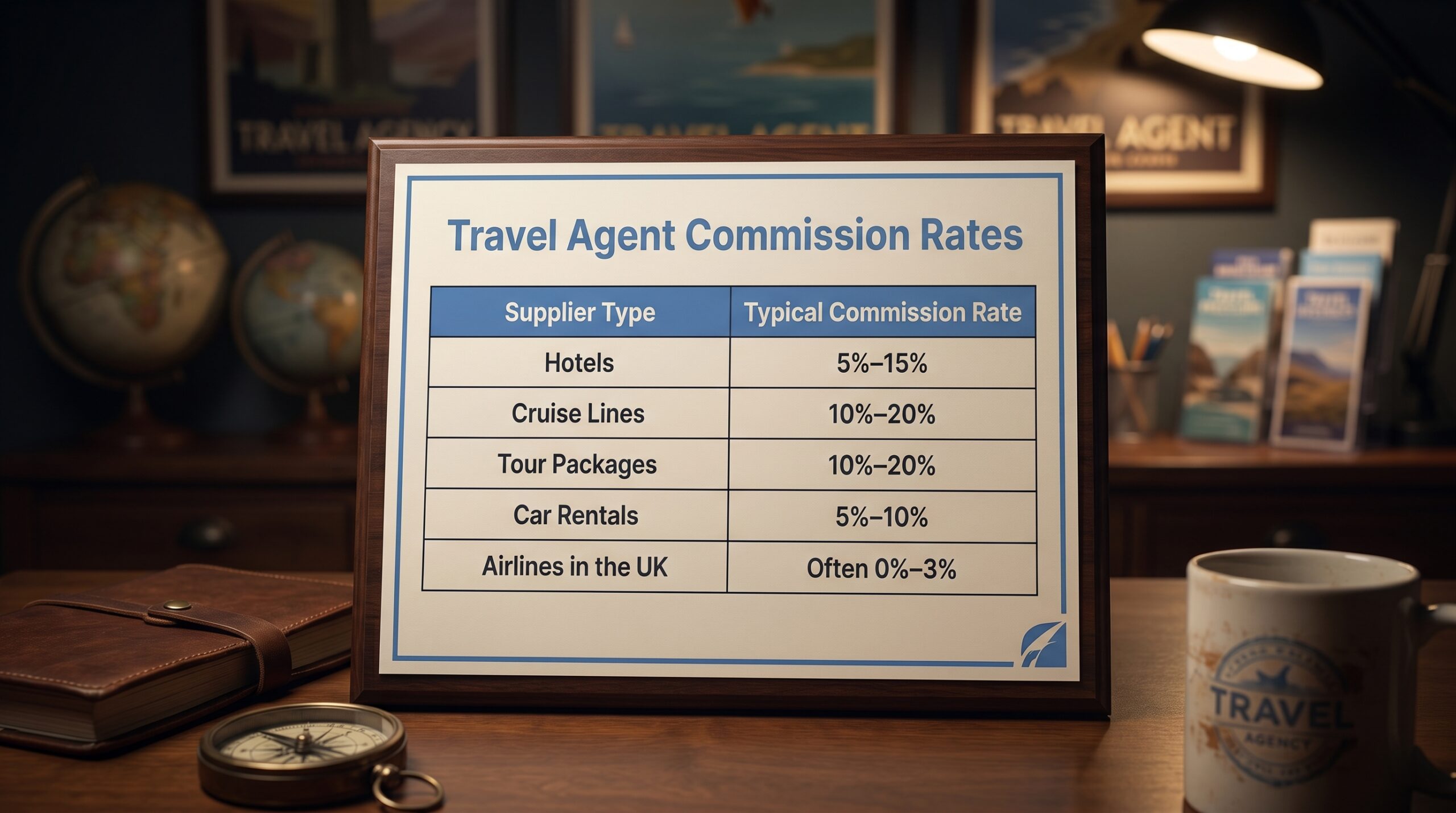
The unexpected thing is that airlines in the UK often pay zero commission to travel agents. So agents add their own service fees to flight bookings instead. By doing this, it keeps their income protected no matter what.
Way 2: Service Fees Charged to Clients
Service fees are becoming very common across the industry. Many agents charge these fees for their time and expertise. Especially, this is true when airlines pay nothing in commission.
Service fees can be structured in two clear ways:
- Flat fee: A fixed amount for a specific service. An agent might charge £50 for booking a full flight and hotel package.
- Hourly rate: A charge per hour of work done. Many agents charge around £30 per hour for consultation.
These fees make sure agents get paid fairly. Even if a client decides not to book in the end, the agent still earns something. Without a doubt, that protection matters hugely for their business stability.
Way 3: Markups on Custom Travel Packages
This method is clever and very effective. Agents build a complete holiday package for their clients. Usually, they include flights, hotels, local tours, and transfers together. They negotiate discounted rates directly with suppliers. Then, they add a small markup to that discounted price. After that, the client sees a final package price that still feels fair and competitive. The difference between the supplier’s price and the final price becomes the agent’s profit. As a result, the client gets a perfectly planned trip. Meanwhile, the agent earns good money for their creative work. Ultimately, everyone walks away genuinely happy.
Way 4: Incentives and Bonuses From Suppliers
Suppliers want agents to sell their specific products. So, they offer exciting rewards to motivate agents. Usually, these rewards are called incentives or override bonuses.
Here are real examples of how this works:
- A cruise line offers a £500 cash bonus when an agent books 10 or more cruises in one month.
- A hotel chain offers free room upgrades or complimentary stays to frequent booking agents.
- Some suppliers offer free holiday trips as a reward for hitting big sales targets.
These bonuses can seriously boost annual income. Essentially, they push agents to work harder and smarter every single month.
Way 5: Group Travel and Corporate Accounts
Handling group trips is one of the most profitable moves an agent can make. Think about organising a big family reunion abroad. Or a company trip for 40 employees. In this case, one booking becomes 40 hotel rooms, 40 flight tickets, and multiple tours. That means much bigger commissions and higher service fees in one go.
On the other hand, corporate accounts work slightly differently. Businesses hire agents to manage all their employees’ travel. This creates a very steady stream of repeat bookings. Companies prefer agents because they save time and always find the best deals. Therefore, this kind of regular business gives agents a reliable monthly income.
Way 6: Selling Travel Insurance
Travel insurance is a seriously underrated income stream. Many travellers want to protect themselves before flying out. They worry about trip cancellations, lost bags, or medical emergencies abroad. Because of that, agents sell travel insurance policies directly to these worried clients.
The earnings work simply. For example, the client pays a £100 insurance premium. The agent earns a 20% commission on that policy. That is £20 earned from one easy sale. Now multiply that across dozens of clients every month. Quickly, the total adds up to a very meaningful extra income. Plus, selling insurance also builds trust with clients. It shows the agent genuinely cares about their safety.
Way 7: Partnering With Tour Operators
Tour operators handle the hard logistical work of running a tour. They arrange local transport, city guides, museum visits, and daily activities. Typically, travel agents team up with these operators as selling partners. The agent markets the tour package to their clients. When a client books, the agent earns a solid commission. The agent never has to manage the complex on-the-ground details. Definitely, this partnership saves huge amounts of time and energy. It also lets agents offer unique, curated travel experiences. Naturally, clients love these special trips that they cannot easily find online.
Way 8: Online Platforms and Affiliate Marketing
Some agents use online affiliate programmes to earn extra cash. This approach suits agents who share travel tips online. They join affiliate programmes from platforms like Expedia or Booking.com. Then, they place special tracking links on their website or social media pages. When a visitor clicks that link and books a trip, the agent earns a commission. This creates a passive income stream that works even while the agent sleeps. Truly, it is a smart modern way to add another layer of earnings.
How Do Travel Agencies Get Paid?
Now, let us look at how the payment process works at the agency level. How do travel agencies get paid exactly? It works through a very organised system.
Every host agency holds a special IATA number. This unique number links every booking to that specific agency. When a client completes their trip, the supplier checks the IATA number. Afterwards, the supplier sends the commission payment to the host agency. The host agency tracks all the incoming payments carefully. Then, the agency pays the individual agent their agreed share.
Here is a simple step-by-step view:
- Step 1: Agent books a trip using the host agency’s IATA number.
- Step 2: The client travels and completes their holiday.
- Step 3: Supplier pays the host agency the full commission.
- Step 4: The host agency processes and splits the payment.
- Step 5: The agent receives their share directly into their bank account.
This system protects everyone involved. Importantly, it keeps money safe, organised, and traceable at every single stage.
How Do You Make Money as a Travel Agent Independently?
Working independently is a genuinely exciting option. How do you make money as a travel agent on your own terms? Basically, independent agents keep full control of their earnings. They do not share commission splits with a big host agency. That means bigger payouts per booking overall.
Yet, they carry their own business costs too. They pay for office space, marketing, and technology tools. Also, they handle their own legal licences and insurance. The fact is that most new independent agents start by joining a host agency first. It is simply the fastest and easiest route into the industry.
Once established, the smartest independent agents follow three proven steps:
Step 1 – Pick a Profitable Niche
Choosing one specific travel type builds real expertise fast. For example, an agent who only sells luxury cruises becomes the go-to expert. Clients pay higher fees for that deep specialist knowledge. As a result, niche agents attract loyal, high-spending customers consistently.
Step 2 – Climb Supplier Commission Tiers
Agents who sell many bookings from one supplier earn more. Usually, suppliers reward loyalty with higher commission percentages. Hitting these upper tiers means a bigger cheque per booking. Plus, special override bonuses kick in at certain sales thresholds too.
Step 3 – Charge Clear Planning Fees
Charging upfront fees protects income from day one. A common starting point among experienced advisors is around £270 per week of travel planned. These fees cover the hours spent researching, planning and booking. They also guarantee pay even when airline commissions are zero.
How Much Do Travel Agents Actually Earn in the UK?
Earnings vary widely based on experience and specialisation. Here is a realistic UK earnings breakdown:
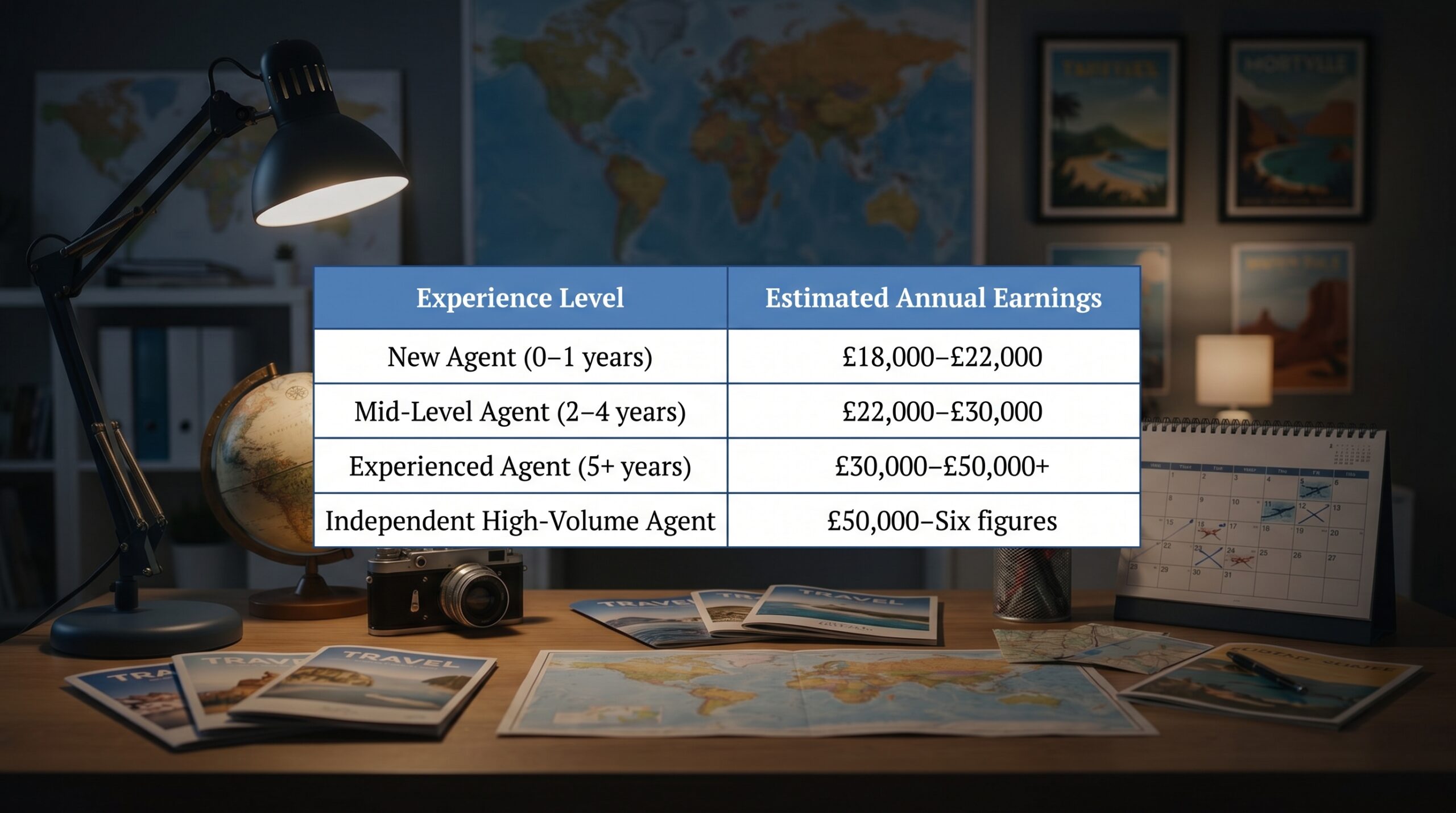
The most successful independent agents book over £1 million in travel annually. At a 12% average commission and a 70–90% agent split, that translates directly into six-figure income. However, that level takes time to reach. Typically, most agents hit their full stride within one to three years of starting.
What Factors Affect How Much an Agent Earns?
Several things directly impact total yearly earnings. Therefore, keep these clearly in mind:
- Product mix matters a lot: Selling cruises, tours, and hotels often brings more income than flights alone.
- Sales volume drives growth: More bookings usually mean more total commission.
- A clear niche can pay better: Luxury, adventure, or group travel can bring stronger earnings.
- Training helps agents earn more: Extra skills and certificates can build trust and improve sales.
- Repeat clients make income steadier: Happy customers often come back and book again.
- A strong network speeds things up: Friends, family, and business contacts can help agents get early clients.
The surprising thing is that a few smart choices can change an agent’s income. The right niche and loyal clients can make growth much easier.
Why Do UK Travellers Still Use Travel Agents?
This is a fair and important question to ask. Online booking tools are everywhere and very easy to use. Yet, millions of UK travellers still choose human agents. Here is why:
- Save time: Agents compare flights, hotels, transfers and packages.
- Find useful deals: Some offers may not appear on public websites.
- Fix travel issues: Agents can help when plans change.
- Give personal advice: They suggest trips based on budget and needs.
- Add extra value: This may include upgrades, meals, or perks.
- Offer ATOL protection: Licensed package holidays give extra financial safety.
The surprising part is that using an agent often costs no more than booking alone. Actually, agents pass savings and added value back to their clients regularly. That makes the whole experience genuinely worth it.
What Does a Real Earning Example Look Like?
Let us look at real commission numbers so this all feels concrete and clear.
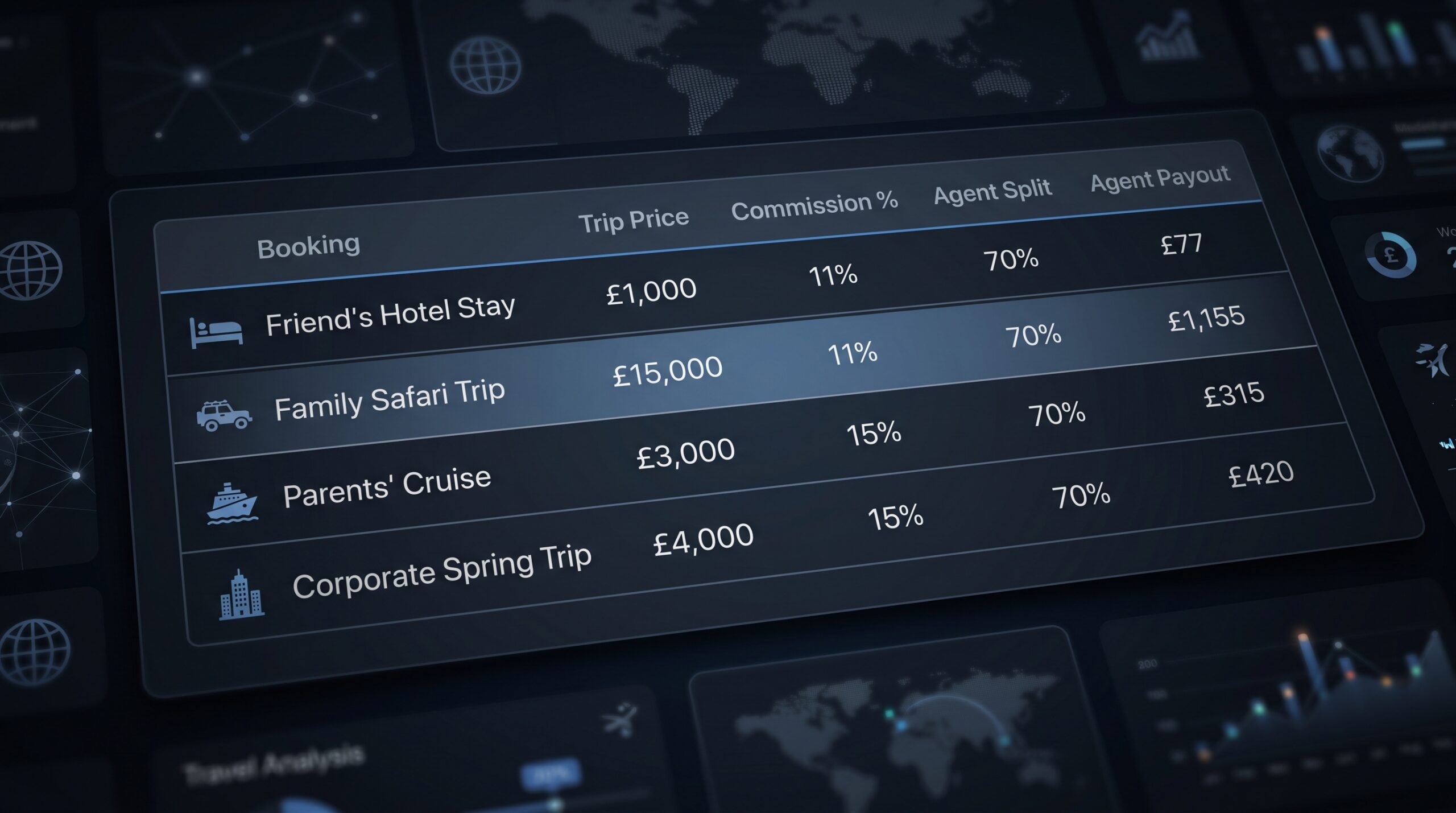
These numbers come directly from real industry commission structures. For example, a safari booking alone pays over £1,000 from a single client. Therefore, combine several bookings like this each month and the income becomes very strong very quickly.
Final Thoughts on How Do Travel Agents Earn Money
So, how do travel agents earn money in the end? The answer is not based on one simple payment. They earn through commissions, service fees, package markups, travel insurance, group bookings, and supplier bonuses. The fact is that these income streams work together and help agents build steady earnings.
The surprising thing is that travel agents do more than book holidays. They save time, find useful deals, and help when travel plans go wrong. Whether you want to become an agent or just understand the industry, one thing is clear. Travel agents earn money by using their knowledge to make travel easier for people.
FAQs
Can You Actually Make Money as a Travel Agent?
- Yes, you can. Many travel agents earn a steady income through commissions, service fees, and repeat clients. The more bookings you make, the more you can earn.
How Do Travel Agents Make Money If They Don’t Charge You?
- Hotels, cruise lines, tour operators, and other travel suppliers often pay agents a commission after a booking. So, many clients never pay the agent directly.
How Much Profit Do Travel Agents Make?
- It varies. New agents may earn a modest income, while experienced or independent agents can earn £50,000 or more each year. Strong sales and loyal clients usually increase profits.
What Are the Downsides of Being a Travel Agent?
- Income can be unpredictable at the start. You may also deal with cancellations, last-minute changes, and busy seasons. Building a client base takes time and effort.
Are Travel Agents Struggling?
- Some agents face challenges from online booking websites. Still, many travellers prefer expert advice and personal support. Skilled agents continue to do well in the industry.
Is Becoming a Travel Agent Worth It?
- Yes, if you enjoy travel and helping people. It offers flexibility, growth opportunities, and the chance to turn your passion for travel into a rewarding career.

Travel Agent Training Course
Course Description :
- Certificate: Yes(Free)
- Accreditation: CPD Accredited
- Access: Lifetime