
No products in the basket.
Welcome to our simple guide about workplace safety in the United Kingdom. If you are new to the UK, you might see many symbols. COSHH means the Control of Substances Hazardous to Health at your job. These rules help everyone stay healthy while they work with chemicals. Every year, thousands of UK workers suffer from skin diseases or lung problems. These health issues happen because of contact with harmful substances at work. To stay safe, you must understand COSHH hazard signs right now.
Understanding these symbols is a legal requirement under the Health and Safety at Work Act. Consequently, this guide will answer your common questions about identifying these signs. Our goal is to help you use hazard symbols correctly every day. You will learn how to protect yourself and your coworkers very easily.
Let us start by looking at what these signs really are.
What Are COSHH Hazard Signs?
Basically, COSHH warning labels are special pictures found on dangerous containers. These signs use a red diamond shape with a white background. Inside the diamond, you will see a black image or symbol.
Their main role is identifying substances that can cause you physical harm. For example, some liquids can burn your skin if you touch them. Other powders might make you cough if you breathe them in. Because of this, the signs act as a clear warning system.
They help prevent accidents, long-term illnesses, and the misuse of chemicals. If you see a flame, you know the liquid can catch fire. Consequently, you will keep that bottle away from any heat or sparks.
Every employee should understand these signs because they protect their long-term health. Even if you do not use chemicals, you might walk past them. Therefore, knowing what the symbols mean keeps the whole team very safe.
Why Are COSHH Hazard Signs Important in the UK?
In the United Kingdom, workplace health and safety is a top priority. Hazard indicators for COSHH are important because they create a universal language for safety. You do not need to speak perfect English to understand a picture.
These signs are relevant across many different industries in the UK. For instance, workers in construction see them on bags of cement. Cleaning staff see them on strong bleach or floor polish bottles. Manufacturing and healthcare workers use them to handle medicine or industrial acids.
Warehouses often store many pallets of goods with these specific labels. Consequently, signs support risk awareness during every part of the workday. They show you how to handle, store, and move items safely.
Moreover, using these signs helps companies meet UK safety expectations and laws. Without these signs, workers would be in great danger every single day. Therefore, they are the first line of defence against workplace injuries.
Which COSHH Symbols and Hazard Signs Should You Know?
There are nine main symbols used in the UK for hazardous substances. You should memorise these hazards from COSHH to stay safe at work. Let us look at each one and what they mean for you.
First, the “Explosive” sign means the item can blast apart suddenly. You must keep these away from fire and very high heat.
Second, the “Flammable” sign is very common on hairsprays or petrol. Because it burns easily, keep it away from open flames always.
Third, the “Oxidising” sign is a bit different from the flame sign. It means the substance helps other things burn much faster and hotter.
Fourth, “Gas under pressure” warns you about heavy metal gas tanks. If you drop these, they can become like a fast rocket.
Fifth, “Corrosive” signs mean the liquid is strong enough to eat skin. When you see this, you have to put on gloves and eye protection.
Sixth, the “Toxic” skull means the substance is a very deadly poison. Never eat, drink, or breathe near a bottle with this symbol.
Seventh, the “Harmful” sign is for things that make you feel itchy. It might also make you feel dizzy if you breathe it.
Eighth, the “Serious health hazard” sign warns of very long-term health problems. This includes things that might cause lung disease over many years.
Lastly, the “environmental hazard” sign tells you not to pour it down drains. This chemical will kill fish and plants in the local rivers.
All these signs of COSHH danger align with the global GHS and CLP rules. Consequently, they look the same in many different countries around the world.
How Do You Read COSHH Labels Correctly?
Reading a label involves more than just looking at the red diamond. You must understand the difference between hazard signs and safety instructions. Labels contain several parts that give you a complete safety story.
Key elements on a label include the specific COSHH hazards themselves. Next to these, you will see “Signal words” like “Danger” or “Warning”. “Danger” is for more serious hazards, while “Warning” is for less serious ones.
Hazard statements explain exactly what the danger is to your body. For example, it might say “Causes severe skin burns and eye damage.” Precautionary statements tell you what to do to stay safe from harm. They might suggest wearing a mask or washing your hands after use.
Reading the full label matters because the symbol only gives a hint. Furthermore, the text tells you how to react if an accident happens. If you splash a chemical, the label tells you how to wash.
Always check for the manufacturer’s contact details on the back of the bottle. Instead of rushing, take one minute to read every word on the label. This small habit can prevent a very big accident in your workplace.
Where Are COSHH Hazard Signs Commonly Found?
You will see COSHH warning labels in many places during your shift. Most commonly, they are printed directly on chemical containers and spray bottles. Look at the side of the bottle before you open the cap.
In cleaning product storage areas, you might see signs on the doors. These warn people not to enter without the right safety gear. Workplace safety posters often show these symbols in break rooms or hallways.
Factories use these signs on large tanks and near busy assembly lines. Schools have them in science labs where students use different types of acids. Hospitals use them for cleaning supplies and some types of medical gases.
Garages often have these signs on oil drums and strong engine cleaners. Furthermore, you will find these symbols inside your company’s COSHH assessments. You can also locate them in the safety data sheets kept in the office.
Whenever you enter a new area, look around for these red diamonds. Consequently, you will always know where the potential dangers are hiding nearby. Learn more at our blog “A Complete Guide to COSHH Signs in Modern Workplaces”
What Does UK Law Say About COSHH Signage?
UK law is very strict about keeping workers safe from dangerous chemicals. The COSHH Regulations require employers to control any risks to your health. Because of this, they must identify every hazardous substance in the building.
Employers have a responsibility to provide clear information and proper training. This includes teaching you how to read the COSHH danger signals correctly. They must also give you the right clothes and masks to wear.
Clear signage is a mandatory part of being a legal UK business. If a bottle has no label, the employer is breaking the law. Proper labelling ensures that everyone knows exactly what is inside every container.
There is a strong link between COSHH rules and HSE (Health and Safety Executive) guidance. Compliance means following these rules to avoid fines or workplace closures. Most importantly, it means every worker goes home healthy at night.
How Can Employers Use COSHH Hazard Signs Effectively?
To keep a team safe, employers must make all signs clearly visible. Do not hide containers behind other boxes or in dark, dusty corners. Ensure all labels stay up to date and are easy to read.
Employers should train staff to recognise warning indicators of COSHH during their first week. Regular training helps people remember what the different symbols mean over time. Combine these signs with detailed COSHH assessments for every task you do.
Review storage and handling procedures regularly to find any new risks. If you buy a new chemical, update your signs and training immediately. Replace damaged or faded signage promptly so the warning stays very clear.
Moreover, use large posters to remind people of the symbols every day. Instead of just talking, show people the symbols on the actual bottles. Good communication makes the workplace much safer for everyone on the team.
What Are the Most Common Mistakes with COSHH Signs?
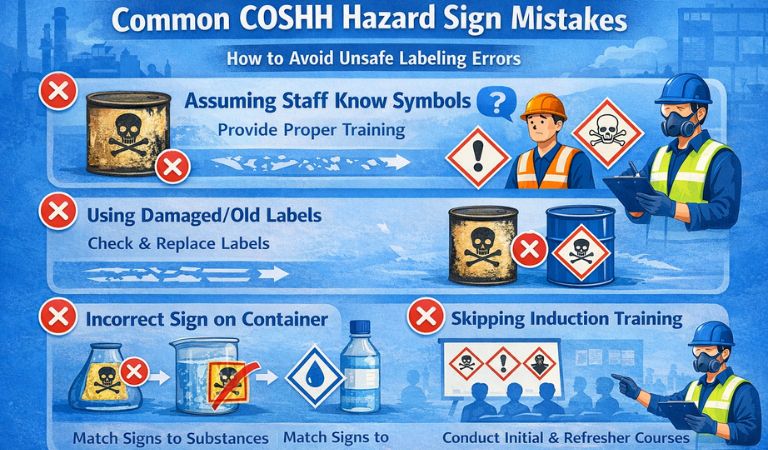
One major mistake is assuming staff already know what the symbols mean. Some workers might be new to the UK and have different signs. Using damaged or unclear labels is another common and dangerous error.
If the symbol is scratched off, someone might use the wrong liquid. Another mistake is confusing old orange symbols with current red diamond pictograms. The UK changed to red diamonds several years ago to match global rules.
Failing to match signage with actual substances on site is also risky. For example, do not put a “Toxic” sign on a bottle of water. Always ensure the sign matches what is actually inside the container today.
Lastly, some companies forget to include COSHH hazard signs in their induction sessions. Refresher training is also necessary to keep safety at the forefront of minds. Avoiding these mistakes will help your business stay safe and legally compliant.
How Can Employees Stay Safe Around Hazardous Substances?
As an employee, you have a role in keeping yourself very safe. Always check the labels and signs that indicate COSHH hazards before you start work. If you do not see a label, do not touch the bottle.
Follow all storage and handling instructions given by your supervisor or manager. This might mean keeping the lid on tight when you are finished. Moreover, you must always wear the correct PPE (Personal Protective Equipment).
PPE includes things like rubber gloves, safety glasses, or face masks. If you see missing or unclear signs, report them to your boss. Never mix different chemicals together without expert guidance from a safety officer.
Refer to COSHH assessments if you are ever unsure about a task. These documents give you a step-by-step guide on how to work safely. By staying alert, you can avoid dangerous spills and harmful health problems.
Do COSHH Hazard Signs Differ from General Safety Signs?
Yes, COSHH hazard signs are different from other workplace health signs. COSHH pictograms specifically identify the danger within a substance or chemical. They are always red diamonds with black symbols on a white background.
General safety signs often use different colours to indicate other things. For example, blue circles are for mandatory actions, like “Wear Eye Protection”. Yellow triangles are for general hazards, like “Tripping Hazard” or “Wet Floor”.
Green squares show emergency exits or first aid kits in the building. Red circles with a line mean you are prohibited from doing something. These signs tell you what to do, but COSHH signs identify chemicals.
Both types of signs are important in a safe workplace system. Understanding the difference helps you react correctly in a busy work environment. Consequently, you will know when to be careful and when to move.
Final Thoughts: Why Should Every UK Workplace Understand COSHH Hazard Signs?
Understanding COSHH hazard signs is the first step in chemical safety. These symbols help prevent serious illnesses and keep everyone healthy while working. Every UK workplace must focus on training, compliance, and daily safety awareness.
Moreover, clear signs protect workers who may not speak English as their first language. Businesses should review their signage and COSHH processes at least once a year. Please conduct a “signage audit” or download a COSHH checklist for your team today.
If you need help, speak to a compliance expert about your workplace. You can also shop for new signs to replace any old ones. Remember, signs are only effective if paired with proper PPE and training. Stay safe, stay healthy, and always read the label before you start.
Frequently Asked Questions (FAQs)
1. What are the 9 COSHH symbols?
- The 9 COSHH symbols include explosive, flammable, oxidising, gas under pressure, corrosive, toxic, harmful/irritant, serious health hazard, and environmental hazard.
2. What do hazard warning symbols look like in COSHH?
- COSHH hazard symbols are red diamond-shaped pictograms with black images that represent different chemical hazards.
3. What are examples of COSHH hazards?
- Examples include chemicals, fumes, dust, vapours, gases, biological agents, and cleaning substances that can harm health.
4. What are the 10 hazard symbols?
- Ten common hazard symbols include explosive, flammable, oxidising, toxic, corrosive, harmful, irritant, gas under pressure, environmental hazard, and serious health hazard.
5. What are the 9 different hazard classes?
- The nine hazard classes include: explosives, gases, flammable liquids, flammable solids, oxidising substances, toxic substances, corrosive substances, health hazards, and environmental hazards.
6. What is a COSHH checklist?
- A COSHH checklist is a document used to identify hazardous substances, assess risks, and ensure proper safety controls are in place.
7. What are the 12 health hazard classes?
- Health hazard classes include acute toxicity, skin corrosion, skin irritation, serious eye damage, respiratory sensitisation, skin sensitisation, carcinogenicity, mutagenicity, reproductive toxicity, aspiration hazard, specific target organ toxicity (for single exposure), and specific target organ toxicity (for repeated exposure).
8. What are the 7 types of safety signs?
- The seven types of safety signs are prohibition, mandatory, warning, safe condition, fire equipment, hazard, and emergency signs.