
No products in the basket.
Welcome to our helpful guide about COSHH hazard symbols. These signs keep you safe while working with chemicals in the UK. COSHH stands for the Control of Substances Hazardous to Health. It is a very important law for every British workplace. You will see red diamond shapes on many cleaning bottles and paint cans. These symbols show the dangers of the liquids inside. Knowing them helps you avoid accidents and stay healthy. Furthermore, the Health and Safety Executive (HSE) manages these rules strictly. They want every worker to understand how to handle dangerous materials. We moved from old orange squares to these new red designs. This guide explains what each sign means for your daily job. Let us learn how to spot hazards and protect ourselves today.
What are COSHH Hazard Symbols, and Why Do They Matter in the UK Workplace?
COSHH covers many things besides liquid chemicals in blue bottles. For example, it includes wood dust and welding fumes. It also covers germs that can make people sick at work. Therefore, you must look for signs on many different items. These symbols come from a global system called GHS. The UK uses these same signs to keep everyone safe. Consequently, people from other countries can understand the dangers easily, too.
Previously, the UK used orange square symbols for many years. However, those old signs are now replaced by red diamonds. This change happened to match international safety standards better. You might still see old signs on very old containers. But new products must always use the red diamond pictograms. Understanding these signs is non-negotiable for your safety at work. They tell you if a substance can burn your skin. Also, they warn you if a gas might explode. If you ignore them, you could get very badly hurt. Following these rules is a legal duty for everyone.
Who needs to understand them under UK law?
Employers have the biggest job under the COSHH rules. They must find out what the health hazards are. Then, they must decide how to prevent harm to workers. This process is called a risk assessment in British law. Additionally, they must provide safety equipment like gloves or masks. They must also train you to understand every symbol clearly.
Employees have important duties to follow every single day. You must use the safety equipment your boss provides. Also, you must follow the training you received recently. If you see a hazard symbol, you must handle it carefully. Moreover, you should report any broken bottles to your manager.
Contractors and visitors must also understand these important safety signs. If someone comes to fix a pipe, they need a warning. They should know where the dangerous chemicals are kept. Thus, your workplace stays safe for everyone who enters it. Even people who do not work there need protection.
Which hazard pictograms will you see on products covered by COSHH?
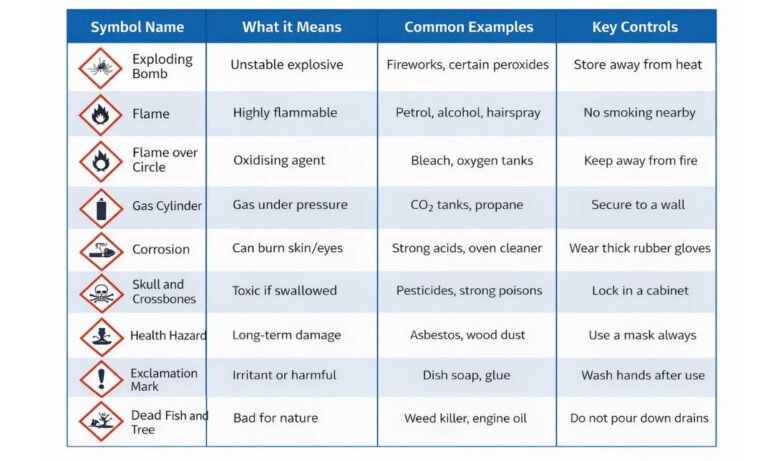
1. What does the exploding bomb symbol mean?
This symbol shows that a substance can explode very easily. These materials are often very unstable or react with air. Therefore, you must handle them with extreme care and focus. Usually, you will find this on specialised industrial products. Keep these items away from any shocks or hard bumps. Also, ensure they stay at the correct room temperature always. If they get too hot, they might react violently. Never store them near other chemicals that could cause heat.
2. What does the flame symbol mean?
The flame symbol identifies materials that catch fire very quickly. This includes many common liquids like solvents and thinners. Additionally, many aerosol cans use this red diamond symbol. You must keep these items away from sparks and flames. Because they burn fast, you need good air flow. Always work in a room with open windows or fans. Store them in a special metal cabinet for fire safety. Then, make sure the lid is tight after every use.
3. What does the flame-over-circle (oxidiser) symbol mean?
An oxidiser provides oxygen to help other things burn better. Even if it does not burn alone, it is dangerous. Therefore, it can make a small fire turn very huge. Keep these chemicals away from paper, wood, and oily rags. Furthermore, you should store them in a separate area. Many industrial bleaches and hair dyes have this specific sign. Always check the label before putting it on a shelf. Since it adds oxygen, it makes putting out fires difficult.
4. What does the gas cylinder symbol mean?
This sign means the container holds gas under very high pressure. If the bottle drops, it could fly like a rocket. Thus, you must always secure cylinders with a chain. Use a proper trolley when moving them across the floor. Check the valves and pipes for leaks every single morning. Because the gas is cold, it can cause frostbite, too. Finally, keep them away from any direct heat or sun.
5. What does the corrosion symbol mean?
The corrosion symbol warns you about serious chemical burn risks. These substances can eat through metal and your skin. For example, strong drain cleaners often carry this red sign. You must wear eye protection to avoid permanent sight loss. Also, wear heavy gloves made from the right plastic material. If you spill it, use a lot of water fast. Always keep an eyewash bottle close to your workbench.
6. What does the skull and crossbones symbol mean?
This is the most serious symbol for immediate health danger. It means the substance is toxic and can kill you. A very small amount can be fatal if inhaled. Therefore, these chemicals are usually kept in locked cupboards. Only trained people should ever touch these dangerous items. Always wear a full respirator if the label says so. Wash your skin immediately if you touch the liquid. Then, call for medical help if you feel dizzy.
7. What does the health hazard silhouette symbol mean?
The silhouette symbol identifies dangers that happen over long periods. For instance, some chemicals cause cancer after many years. Other substances might cause asthma or make breathing very hard. Because you cannot see the damage, it is very scary. You must use special fans to suck away the dust. This is called Local Exhaust Ventilation (LEV) in the UK. Always go to your health checks if your boss asks.
8. What does the exclamation mark symbol mean?
This symbol is for substances that are harmful but less deadly. It might cause a red rash on your skin. Also, it could make you cough or feel slightly sick. However, you still need to follow the safety rules carefully. Wear light gloves to keep the liquid off your hands. Always wash your arms before you eat your lunch. Because it is common, do not become lazy with safety.
9. What does the environmental (dead fish/tree) symbol mean?
The environmental symbol tells you the substance hurts the Earth. It is especially dangerous for fish and plants in rivers. Therefore, you must never pour these liquids into a sink. Use a special bin for oily rags and old paint. If you have a spill, use sand to stop it. Then, clean it up using a proper spill kit. Protecting our water is a very important part of COSHH.
How do you identify and use COSHH Hazard Symbols on labels and Safety Data Sheets?
You will find these symbols on the front of bottles. They are usually placed next to the product name clearly. Along with symbols, look for the “Signal Word” in bold. The word “danger” is for the most serious hazards. However, “Warning” is used for hazards that are less severe. Both words tell you to pay attention to the bottle.
Labels also have H-statements and P-statements to help you. H-statements describe the type of hazard, like “causes eye burns”. “P-statements tell you how to stay safe, like “wear gloves”. Together, they give you a full picture of the risk. Furthermore, every chemical must have a big document called a ‘Safety Data Sheet’. People often call this an SDS for short in workplaces. This sheet has sixteen sections full of very detailed information.
The chemical safety data sheets are vital for your risk assessment. Section two lists all the hazard symbols for that product. Section four tells you what to do for first aid. Next, section eight explains which gloves or masks to wear. Section thirteen tells you how to throw away the waste safely. Always read these sections before you start a new job.
How do you turn symbols into practical controls?
First, look at the pictograms on the container label. Then, check the signal word to see the danger level. Next, read the SDS to find the right safety gear. This might be a mask or a thick apron. Define where you will store the item when finished. Plan what to do if the liquid spills on the floor. Finally, write these steps down in your COSHH assessment form. Share this plan with your teammates so everyone is safe.
What Should a UK COSHH Risk Assessment Include When Hazard Symbols Are Present?
A risk assessment is a written plan for your safety. You must record the name of the substance you use. Also, describe exactly how you are using it each day. List who might be hurt if something goes wrong today. This includes cleaners, office staff, and the public as well.
Then, you must choose controls using the proper hierarchy. The best way is to stop using the chemical completely. If you cannot, try to find a safer liquid instead. Next, use machines or fans to keep the air clean. If that is not enough, use signs and training. Finally, give the workers PPE like goggles and masks.
Sometimes, you need to check if workers stay healthy. This is called ‘health surveillance’, and it is very important. A nurse might check your lungs or your skin health. Also, you must review your assessment every single year. If the work changes, you must update the plan immediately.
What are common COSHH symbol mistakes that cause incidents or non-compliance?
Many people only look at the symbols and stop reading. This is a big mistake because symbols do not tell everything. You need to read the words on the label too. Another common error is pouring chemicals into old water bottles. This is very dangerous because someone might drink the poison. Always keep chemicals in their original bottles with the labels.
Furthermore, some people store the wrong chemicals together in cupboards. For example, never put bleach and acids in one spot. They can create a toxic gas that stops you from breathing. Also, some workers forget to replace their spill kit items. Always check that your safety equipment is ready for use.
Where Will You Commonly See These Symbols in UK Workplaces?
You will see the exclamation mark in every cleaning cupboard. Janitors use many soaps that can irritate the skin. On construction sites, the corrosion symbol is very common. This is because cement can burn your skin quite badly. Workshops often have the flame symbol on tins of paint.
Healthcare workers see the health hazard symbol in hospital labs. They use strong chemicals to clean tools and test blood. Schools also have these symbols in the science classrooms. Even a small office might have them for printer ink. Since they are everywhere, you must always be very alert.
What Training and Signage Do UK Employers Need Around COSHH Symbols?
Employers must provide training to every person who uses chemicals. This training should explain what the symbols mean to them. You should also learn how to use the safety equipment. Your boss must keep a record of your training dates.
Signage is also required in areas where chemicals are stored. Put a sign on the door of the chemical room. This warns people before they enter a high-risk area. If you move a liquid, you must label the new bottle. The new label must have the correct red diamond symbols. You can buy stickers that have these pictograms on them.
A quick-reference poster is a great idea for the wall. It should show every symbol and a short safety tip. This helps people remember their training while they are working.
Comparison: Old orange symbols vs current CLP pictograms
The old system was called ‘CHIP’, and it used squares. The background was orange, and the picture was black. Now, we use the CLP system with white diamonds. The border of the diamond is always a bright red. This arrangement makes the signs much easier to see from far. The pictures inside are mostly the same as before. However, the health hazard silhouette is a brand-new design. Always look for the red border to find modern signs.
What Should You Do if a Container Has No Hazard Symbols?
Sometimes, a label falls off or gets too dirty. If this happens, you must act very quickly and safely. First, do not touch or smell the unknown liquid inside. This is very dangerous because it could be toxic gas. Put the container in a safe, quiet place alone. Then, put a sign on it that says “Do Not Use”.
Try to find out what it is by checking records. Please review your recent orders or consult with your manager today. If you cannot identify it, you must throw it away. Contact a special waste company to take it away safely. Never pour an unknown liquid down the toilet or drain. Finally, report this as a near-miss to your safety officer. This helps the company prevent it from happening again later.
Final Thoughts
Knowing COSHH hazard symbols is the first step toward a safer UK workplace. These red diamonds tell you how to stay healthy every day. Always read the labels and use your safety equipment properly. If you stay alert, you will prevent many painful accidents. Download our COSHH Checklist or contact us for a professional health and safety audit. You can find official guidance at the HSE website. Stay safe and work smart!
FAQ
1. What are the 9 COSHH symbols?
- The 9 COSHH symbols represent toxic, harmful, corrosive, irritant, flammable, explosive, oxidising, gas under pressure, and environmental hazards.
2. Which hazards are covered under COSHH?
- COSHH covers chemical, biological, and workplace substances that can cause harm, including toxic, corrosive, irritant, flammable, and infectious hazards.
3. What do hazard warning symbols look like in COSHH?
- COSHH hazard symbols are pictograms with black images on orange or white backgrounds, such as flames for flammable substances, and skulls for toxic substances.
4. What are the hazard symbols?
- Hazard symbols indicate risks like explosive, flammable, oxidising, toxic, corrosive, irritant, environmental, gas under pressure, and health hazards.
5. What are the 9 different hazard classes?
- The 9 hazard classes are explosives, gases under pressure, flammable liquids, flammable solids, oxidisers, toxic substances, corrosive substances, irritants, and environmental hazards.
6. What are the 7 safety symbols?
- Seven safety symbols include prohibition, mandatory, warning, safe condition, fire equipment, hazard, and emergency signs.
7. What are the 9 chemical hazards?
- Nine chemical hazards are flammable, explosive, oxidising, toxic, harmful, corrosive, irritant, gas under pressure, and environmentally hazardous substances.
8. What are the 8 principles of COSHH?
- The 8 COSHH principles are identify hazards, assess risks, control exposure, maintain control measures, use PPE, provide training, monitor and review, and record findings.